


Accurate gas measurement is essential in scientific research where reliable, repeatable data can determine the success of an experiment.
CO2Meter provides CO2 sensors, oxygen sensors, gas detectors and data logging solutions for scientific and university research. Our gas sensing technologies have been used by researchers and educational institutions in applications ranging from brain imaging and respiratory analysis to environmental monitoring, biology, robotics and indoor air quality.
Over the years, CO2Meter has worked with researchers at universities including Harvard, Purdue, MIT, UC Berkeley and many others using gas sensor technologies to collect and analyze data for scientific research, discovery and development.
Why Are Gas Sensors Used in Scientific Research?
Gas sensors allow researchers to continuously measure changes in gases such as carbon dioxide (CO2) and oxygen (O2) during experiments.
Depending on the research application, scientists may need to measure gas concentration, monitor rapid changes, collect measurements over time or integrate sensor data into a larger experimental system.
Research applications for gas sensors include:
- Respiratory and breathing studies
- Brain imaging and cerebral blood-flow research
- Indoor air quality
- Environmental monitoring
- Biology and life sciences
- Incubation
- Robotics
- Composting
- Capnography
- CO2 capture research
- Agricultural research
- Gas analysis and instrumentation
Selecting the appropriate sensor depends on factors such as the gas being measured, concentration range, response speed, accuracy, sampling method, environmental conditions and data collection requirements of the experiment.
What Should Researchers Look for in a Gas Sensor?
Not every gas sensor is appropriate for every research application.
Researchers should evaluate the specifications of a gas sensor against the requirements of their experiment before selecting a gas measurement solution.
Important considerations can include:
1. Measurement range: The sensor must be capable of measuring the expected gas concentrations within the experiment.
2. Accuracy and repeatability: Reliable research requires measurements that can be consistently reproduced under similar conditions.
3. Response speed: Applications involving respiration, gas mixing or rapidly changing concentrations may require a sensor capable of taking measurements multiple times per second.
4. Sampling method: Researchers may need a diffusion sensor, flow-through sensor or complete sampling system depending on how the gas is being measured.
5. Data logging: Recording gas concentrations over time allows researchers to analyze trends, compare experimental conditions and document results.
6. Integration: Sensor output and communication protocols should be considered when integrating a gas sensor into custom research equipment, microcontrollers or data acquisition systems.
Understanding these requirements before selecting a sensor can help researchers identify the appropriate gas measurement technology for their study.
CO2 Sensors for Brain Imaging and Cerebral Blood Flow Research
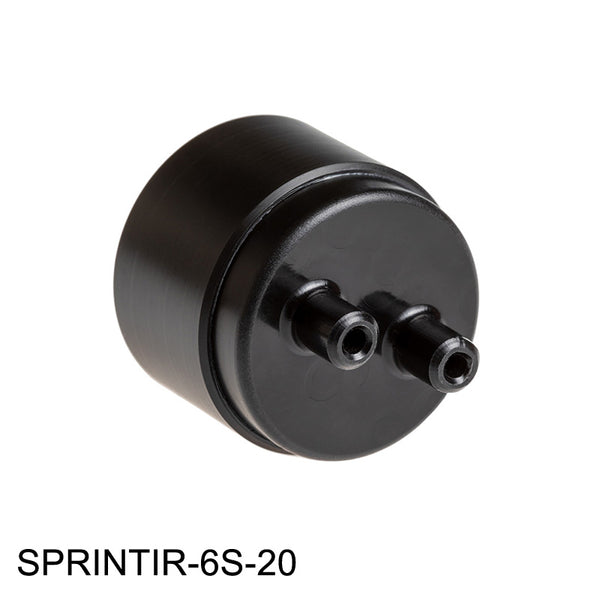
This past year, a California University was awarded a government grant to utilize the SprintIR6S 20% CO2 Smart Sensor technology in a rare brain imaging application dedicated to understanding the structure, function, and direct effect of carbon dioxide and cerebral blood flow.
The research required rapid CO2 measurements to capture changes occurring during the study.
The SprintIR-6S is designed for high-speed CO2 measurement and was incorporated with CO2Meter GasLab® data logging software to record and analyze measurements throughout the experiment.
This application demonstrates how high-speed gas sensing can be incorporated into specialized research where researchers need to measure rapidly changing carbon dioxide concentrations.
This is just one small example of research (the university) and industry (CO2Meter) collaborating on a project to create accurate and replicable solutions. It will take years for these new technologies to reach the markets but consumers will eventually realize the benefits of these types of research.
Oxygen Sensors for Respiratory and Pilot Mask Research
Another intriguing university project involved Oxygen mask design safety, from the National University capstone project. Researchers were able to conduct a study on the overall importance of O2 concentrations passing through an F-35 Lightning II pilot mask.
Applications involving respiratory equipment, breathing systems and gas delivery may require researchers to continuously monitor oxygen concentration and record changes throughout a test.
Oxygen sensors can also support research involving respiratory analysis, medical equipment development, environmental chambers and other applications where accurate O2 measurement is required.
The CM-42951 0-25% UV Flux Oxygen Smart Sensor was incorporated into this study and led to providing the incredibly useful and reliable results shown below.

CO2 Sensors for Environmental and Indoor Air Quality Research
Aside from these university studies, we also want to recognize a memorable science research project from Walt Whitman High School in Cold Spring Harbor.
CO2Meter supported a research project that measured carbon dioxide concentrations indoors and outdoors, using the K30 10,000ppm CO2 sensor with an Arduino Uno microcontroller to collect measurements.
Projects like this demonstrate how gas sensors can support research at many levels, from introductory STEM and university projects to advanced scientific studies.
Aaron, a student at Walt Whitman stated, "As I am relatively new to Arduino in general, I have been using the examples from the CO2Meter site to help me get started. The code examples online have been very great help so far!".
The team at CO2Meter is proud to have the opportunity to provide technologies and support for those researchers conducting the studies today that are creating tomorrow's advancements.
The future holds even more opportunities for furthering research discoveries and advancements, much like respiratory mask analysis, environmental sensing, CO2 capture, medical treatments, and much more.
How Is CO2 Measured in Research?
Carbon dioxide can be measured using several sensing technologies depending on the application. One technology commonly used for CO2 measurement is non-dispersive infrared (NDIR) sensing.
NDIR CO2 sensors measure the absorption of infrared light by carbon dioxide molecules to determine CO2 concentration.
For research applications, the appropriate measurement system depends on variables such as:
- Expected CO2 concentration
- Required measurement accuracy
- Response time
- Sampling frequency
- Temperature and humidity conditions
- Flow or diffusion requirements
- Data output and communication requirements
- Calibration requirements
Some applications may require measurements near typical atmospheric CO2 concentrations, while respiratory, biological, industrial or experimental applications may require sensors capable of measuring much higher concentrations.
Choosing a CO2 or Oxygen Sensor for Your Research Project
The best gas sensor for a research project depends on what you are trying to measure and how the experiment will be conducted.
Before selecting a sensor, researchers should identify:
-
Which gas needs to be measured?
-
What concentration range is expected?
-
How quickly can the concentration change?
-
How frequently does data need to be collected?
-
Will the gas be measured through diffusion or a flow-through sampling system?
-
Does the sensor need to integrate with other equipment or software?
-
What accuracy and repeatability does the experiment require?
Providing these details can make it easier to identify a gas sensor and data collection system that fits the requirements of the research.
Frequently Asked Questions about Gas Sensors for Scientific Research
What gas sensors are commonly used in scientific research?
CO2 and oxygen sensors are used in research applications including respiratory studies, environmental monitoring, indoor air quality, biology, incubation, brain imaging and gas analysis. The appropriate sensor depends on the target gas, expected concentration range, response time and accuracy requirements of the experiment.
What is the best CO2 sensor for a research project?
The best CO2 sensor depends on the requirements of the study. Researchers should consider measurement range, accuracy, response time, sampling frequency, operating environment, sampling method and data output before choosing a CO2 sensor.
Can CO2 sensors be used for university research?
Yes. CO2 sensors can be incorporated into university and laboratory research involving environmental monitoring, respiration, biology, indoor air quality, agriculture, CO2 capture and other applications where carbon dioxide concentrations need to be measured.
What is an NDIR CO2 sensor?
A non-dispersive infrared (NDIR) CO2 sensor measures carbon dioxide by detecting how much infrared light is absorbed by CO2 molecules. NDIR technology is commonly used for CO2 measurement because it can provide continuous, real-time measurements across a variety of concentration ranges.
Can gas sensors collect data in real time?
Yes. Many gas sensors provide continuous measurements, and some sensors are designed for applications requiring rapid sampling. Compatible data logging software or external data acquisition equipment can be used to record measurements for later analysis.
Can CO2 sensors connect to Arduino?
Some CO2 sensors can be integrated with Arduino and other microcontrollers, depending on their communication interface and electrical requirements. Researchers should review the sensor's technical documentation and integration requirements before designing a custom system.
What is the difference between a CO2 sensor and an oxygen sensor?
A CO2 sensor measures the concentration of carbon dioxide, while an oxygen sensor measures oxygen concentration. The appropriate sensor depends on the gas being studied. Some experiments may require both CO2 and O2 measurements.
How accurate do gas sensors need to be for scientific research?
The required accuracy depends on the research question and experimental design. Researchers should evaluate sensor accuracy, repeatability, resolution, measurement range, response time and calibration requirements when determining whether a sensor is appropriate for a particular study.
Can gas sensor measurements be logged for research?
Yes. Compatible gas sensors can be connected to data logging software or data acquisition systems to record measurements over time. Logged data can then be analyzed to identify trends, compare experimental conditions and document research results.
Does CO2Meter help researchers select gas sensors?
CO2Meter works with researchers, universities and organizations to identify gas sensing technologies appropriate for specific applications. Providing information about the target gas, concentration range, required response speed, sampling method and experimental setup can help determine which sensor may be suitable.
Gas Sensors and Measurement Solutions for Your Next Research Project
From university studies and student STEM projects to advanced scientific research, CO2Meter provides gas sensing and measurement technologies for a wide range of applications.
Our team can help researchers evaluate CO2 sensors, oxygen sensors, data logging solutions and gas measurement equipment based on the specific requirements of their experiment.
Whether your research involves respiratory analysis, environmental sensing, indoor air quality, CO2 capture, biology or another gas measurement application, selecting the appropriate sensor is an important first step toward obtaining reliable and repeatable data.
