


Cryogenic safety is ensuring proper procedures are followed when working with cryogenic gases and liquids.
Cryogenic gases (called cryogens) include argon, helium, hydrogen, nitrogen, oxygen, methane and CO2. These gases are used to produce very low temperatures in the laboratory, in research facilities, in medicine and in industry.
Cryogens are created by pressurizing gases above their triple point where they change state from a gas to a liquid. In their liquid state they are very cold. The development of the process of creating and storing low temperature gases has opened up the field of cryogenics from the research lab to a host of industrial and health-related processes around us.
Learn more about cryogenics here.
While cryogenics has created great benefits, cryogens, if not handled correctly, can be unsafe. It's important to know what cryogenic gases are, how they are used and how they can be used safely.
Oxygen Deficiency Hazards when Working with Cryogenic Gases
One of the greatest hazards associated with cryogenic gases is oxygen deficiency, also known as oxygen depletion.
While many cryogenic gases including liquid nitrogen, argon, helium, and carbon dioxide are non-toxic, they can rapidly displace oxygen in enclosed or poorly ventilated spaces if a leak occurs.
Because these gases are colorless, odorless, and often undetectable without specialized equipment, personnel may not recognize a dangerous atmosphere until symptoms of oxygen deficiency begin to appear.
According to OSHA, normal atmospheric oxygen levels are approximately 20.9%. Oxygen concentrations below 19.5% are considered oxygen-deficient and hazardous to worker safety.
As oxygen levels decrease, the body's ability to function is quickly impaired. Early symptoms of oxygen deficiency may include headache, dizziness, rapid breathing, fatigue, poor coordination, and impaired judgment.
Continued exposure can result in unconsciousness, asphyxiation, or death within minutes, depending on the oxygen concentration and duration of exposure. For this reason, facilities that store or use cryogenic gases should install fixed oxygen deficiency monitoring systems in storage rooms, laboratories, MRI suites, freezers, confined spaces, and other areas where oxygen displacement may occur.
Cryogenic Gas & Liquid Uses
Cryogenic gases and liquids are used far more often than you might imagine.
For example, the cryogenic liquid, nitrogen, is used as an industrial cryogenic gas to freeze plastic before it is ground up and recycled. Applications such as these continue to use cryogenic gases in many different areas such as cryogenics, food preservation, cryosurgery, and cryotherapy services.
All applications that use cryogenic liquids or gases require safety monitoring as detailed by OSHA. Monitoring nitrogen or carbon dioxide requires oxygen depletion monitoring. Oxygen is normally 20.9% in ambient air. As it is displaced by other gases in an enclosed area, the oxygen level can drop to 18% - the OSHA minimum oxygen level for workplace safety.
Cryogenic Gas Applications
- Food processing: uses liquid nitrogen to freeze and preserve food. CO2 may also be used depending on process times, in flush tunnel or immersion processes.
- CO2 Storage: in a high-pressure gas or liquid state, CO2 is used in restaurants, bars, breweries and industrial applications. The CO2 displacement of oxygen adds a potential for oxygen depletion.
- Healthcare: Liquid helium is essential for operating MRI machines and many superconducting applications such as infrared imaging.
- Research: liquid nitrogen or carbon dioxide are used to freeze tissue samples in labs or research facilities, or to store embryos for invitro fertilization. Surgeons and dermatologists also used liquid nitrogen as an aerosol to freeze and cauterize basil cells and tumors.
- Cryosurgery: uses gas to freeze or destroy tissues like cancer in the body during surgery or on the skin to kill cancer cells. While some types of cryotherapy are controversial, they have lead to the creation of cryospas where the general public can get cryotherapy treatments.
-
Dry cleaning: this application uses liquid CO2 as a solvent to remove soil from fabric without the need for flammable solvents like methylene chloride.
- Cannabis: cannabis oil extraction requires complete evacuation of oxygen in the process chamber via a nitrogen flush. Even a small amount of oxygen can affect the oil extracted in many undesirable ways including taste, selectivity, and potency.
- Precision welding: on an industrial scale uses liquid argon, CO2 or nitrogen to displace all the oxygen at the point of the weld.
In every application above, cryogenic safety is important when handling or working around tanks of liquid cryogenic gases.
Personal Protective Equipment (PPE) for Cryogenic Safety
Proper personal protective equipment (PPE) is essential when handling cryogenic gases and liquids such as liquid nitrogen, liquid oxygen, liquid argon, helium, and carbon dioxide.
Because cryogenic liquids can reach temperatures below -300°F (-184°C), accidental contact can cause severe cold burns, frostbite, eye injuries, and permanent tissue damage within seconds. Wearing the appropriate PPE helps reduce the risk of injury while transferring, storing, or working near cryogenic materials and should always be part of a comprehensive cryogenic safety program.
Recommended cryogenic PPE includes:
- Cryogenic-rated Gloves designed to protect hands from extreme cold while allowing quick removal in the event of a spill.
- Safety goggles and a full face shield to protect the eyes and face from splashes, flying ice particles and pressure releases.
- Long-sleeved lab coats or cryogenic aprons made from non-absorbent materials to protect the torso and arms.
- Long pants and closed-toe shoes that fully cover the legs and feet to minimize skin exposure.
- Loose-fitting clothing that can be quickly removed if cryogenic liquid is spilled, avoiding cuffs or pockets where liquid may become trapped.
Cryogenic Gas Pressure, Density and Boiling Points Chart
This chart lists all the common cryogenic gases as well as the temperature at which they change from liquids to gas (boiling point). The lower the boiling point, the more colder the gas can become. Note that at these low temperatures, skin can freeze instantaneously.
Also note that the liquids to gas expansion ratio shows how much air is displaced by a given amount of gas. For example, one liter of liquid argon expands to 860 liters of gas. This means that even a small leak of cryogenic gases can quickly displace all the breathable air in an enclosed area.
|
Cryogen |
Boiling point (1 atm) oC(oF) |
Critical pressure psiga |
Liquid density, g/L |
Gas density (27oC), g/L |
Liquid-to-gas expansion ratio |
Type of gas |
|
Argon |
-186(-303) |
710 |
1402 |
1.63 |
860 |
Inert |
|
Helium |
-269(-452) |
34 |
125 |
0.16 |
780 |
Inert |
|
Hydrogen |
-253(-423) |
188 |
71 |
0.082 |
865 |
Flammable |
|
Nitrogen |
-196(-321) |
492 |
808 |
2.25 |
710 |
Inert |
|
Oxygen |
-183(-297) |
736 |
1410 |
1.4 |
875 |
Flammable |
|
Methane |
-161(-256) |
673 |
425 |
0.72 |
650 |
Flammable |
|
CO2 |
-79(-108) |
1071 |
100 |
20 |
535 |
Inert |
Cryogenic Gas & Liquid Safety
The challenge with cryogens is safety. All of the cryogenic gases have potential safety problems beyond their freezing hazards. As they return to a gas they expand rapidly to many times greater than their volume. For example, nitrogen gas expands 700 times its liquid volume (see chart). As a result, the expanding gas can quickly displace other gases. The main area of concern is oxygen, where oxygen displacement can result in asphyxiation or death.
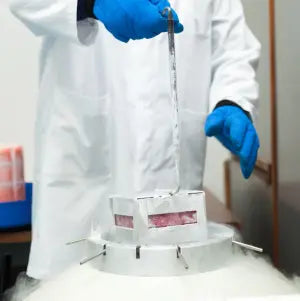
Aside from these use cases and applications regarding ensuring safety in the workplace, one should adhere to the following:
Skin tissue: Extreme cold can rapidly freeze skin tissue, which is why liquid Nitrogen is often used to freeze off unwanted tissue by dermatologists. However, this presents a danger when it meets healthy tissue: skin can crack and freeze causing frostbite. Some extremities might be protected by the Leidenfrost Effect in which liquids that comes into contact with something much hotter than itself forms an insulating layer of vapor to prevent the liquids from immediately boiling, this can only last so long, and it is for ones best interest to wear gloves and PPE - personal protective equipment.
Asphyxiation: Inert gas asphyxiation is a form of asphyxiation which results from breathing in a gas in the absence or Oxygen or low amount of Oxygen rather than air. Physiologically inert gases such as liquid Nitrogen does not act upon the heart or hemoglobin and instead reduces Oxygen concentration in blood to low levels, depriving cells of Oxygen. Breathing in these gases with deficient Oxygen can have immediate and serious effects after a few short breaths. Gases such as liquid Nitrogen have no taste or smell, so it is impossible to know if you are inhaling the hazard.
It's important to have a gas detection monitor that can monitor the level of oxygen in the environment, so an asphyxiation incident does not occur.
Pressure build up: We know that heating materials up to extremely high temperatures can cause explosions, but so can cooling them down. Cooling a substance makes it denser and less likely to expand, however gases under pressure risk leaking and expanding inside their container. When a gas expands inside an enclosed container, the pressure inside can push outwards causing leaks or even an explosion.
Cryogenic Gas & Liquid Safety Whitepaper

The use of cryogenic gases and liquids such as nitrogen and helium require careful handling and adherence to specific guidelines and procedures.
In this whitepaper, CO2Meter delivers key insights that help educate on the hazards associated with cryogenic gases and liquids and safety best practices to keep you, your staff, and your establishment protected.
Contents
- Cryogenic Applications across the Industry
- The Importance of Gas Safety
- Hazards Associated with Cryogenic Liquids
- Cryogenic Liquids Standards and Regulations
- Importance of Measuring for Oxygen Depletion
- Industrial Gas Detection Solutions

Cryogenic Gas & Liquid Safety Tools

Facilities storing or using cryogenic gases should implement a comprehensive oxygen deficiency monitoring program.
Protecting yourself from exposure starts with solutions like a fixed oxygen deficiency and enrichment alarm to provide continuous monitoring and activate audible and visual alarms when oxygen concentrations fall below safe levels.
Many facilities also integrate oxygen monitoring systems with building management systems and ventilation controls for automatic emergency response.
Read how our products protect employees in medical and laboratory facilities.
Best Practices for Installing Oxygen Deficiency Alarms in Cryogenic Storage Areas
To maximize protection it's important to follow the following best safety practices:
- Place alarms at breathing height in storage rooms, labs, and cylinder areas.
- Install monitors in confined spaces where oxygen displacement is most likely.
- Integrate alarms with ventilation and building management systems for automatic response.
- Test and calibrate gas safety devices regularly to maintain accuracy.
The RAD-0002-ZR-HS2 Oxygen Deficiency Alarm offers flexibility for both new and existing cryogenic installations, making it a best-practice choice for proactive safety.
Although cryogenic gases are necessities in many applications, they are still hazardous, and the proper precautions must be taken in order to avoid catastrophes.
Frequently Asked Questions about Cryogenic Safety
What is cryogenic safety?
Cryogenic safety refers to the safe handling, storage, and use of cryogenic gases and liquids such as liquid nitrogen, oxygen, argon, helium, and carbon dioxide. Proper safety practices help prevent frostbite, oxygen deficiency, pressure buildup, and other hazards associated with extremely low temperatures.
What are cryogenic hazards?
The primary cryogenic hazards include frostbite, cold burns, oxygen deficiency, pressure buildup, and material failure caused by extremely low temperatures. Following proper handling procedures, wearing PPE, and using oxygen monitoring systems helps minimize these risks.
Why do cryogenic gases cause oxygen deficiency?
As cryogenic liquids evaporate, they rapidly expand into gas and can displace breathable oxygen in enclosed or poorly ventilated areas. Because oxygen depletion cannot be detected by sight or smell, continuous oxygen deficiency monitoring is critical for worker safety.
Is liquid nitrogen dangerous?
Yes. Liquid nitrogen can cause severe frostbite upon contact and may create an oxygen-deficient atmosphere if released in an enclosed space, increasing the risk of asphyxiation.
Where should oxygen deficiency monitors be installed?
Oxygen deficiency monitors should be installed anywhere cryogenic gases are stored or used, including laboratories, MRI rooms, storage areas, confined spaces, and manufacturing facilities. Monitors provide early warning when oxygen levels fall below OSHA's minimum safe concentration of 19.5%.
What OSHA standards apply to cryogenic gases?
While OSHA does not have a single cryogenic-specific standard, regulations covering compressed gases, confined spaces, hazardous chemicals, and oxygen-deficient atmospheres all apply. Employers should also follow applicable guidance from the Compressed Gas Association (CGA), NFPA, and local fire codes.


